
Depth
44 Meter
Type
-
Dimension
- Meter
Location
Büyük Kemikli MevkiiPhoto Gallery
AllIt is recorded as the place where Halley's Comet was first observed in history. Pliny the Elder and Aristotle describe that a large brown meteorite landed near the ancient settlement of Aegospotami, which overlooks the Bebek Rocks, in 467 BC, during which Halley's Comet was also visible. It is also estimated that the Battle of Aegospotami, fought among the Athenians and resulting in a decisive Spartan victory, took place in this region. According to another legend about the Bebek Rocks, the local population fleeing pirate raids left their babies on these rocks so their cries would not be heard, which is why the formation is referred to as the Bebek (Baby) Rocks.
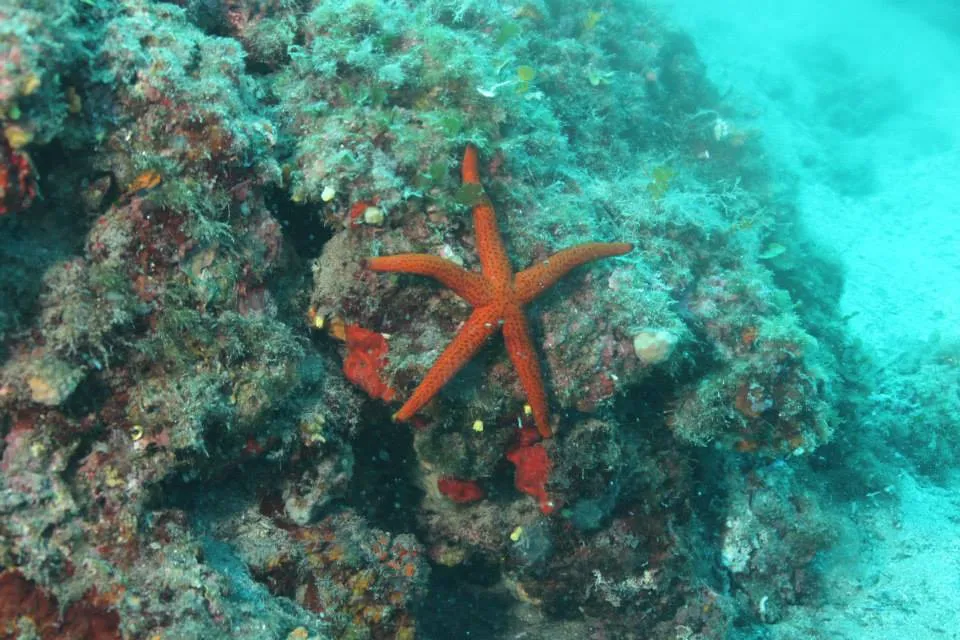
Hosting numerous dive sites, Bebek Rocks offers hundreds of colors and marine species together for divers wishing to experience drift diving. Within the first 20-meter zone, a dense population of yellow and soft corals can be observed. Indeed, while corals typically open their tentacles at night to feed on zooplankton, they feed during the day here due to the strength of the current. Red and yellow blackheaded blennies, which can be seen in almost every rock crevice, and spiny lobsters trying to protect themselves from predators with their long antennae are other fauna species you will encounter here. Bebek Rocks also features a rich fauna in terms of moray eels. Additionally, there is a high probability of encountering species such as dolphins, anglerfish, or catsharks in this area.
The equipment used for diving includes basic scuba gear. A 3-5mm wet neoprene wetsuit can be worn from April to October, while a 7mm wet neoprene, semi-dry, or drysuit is suitable from November to March.